Diamond
Diamond is pure carbon, formed deep in the earth and brought up by volcanoes. It is the hardest natural substance known, and it is graded more strictly than any other gem.
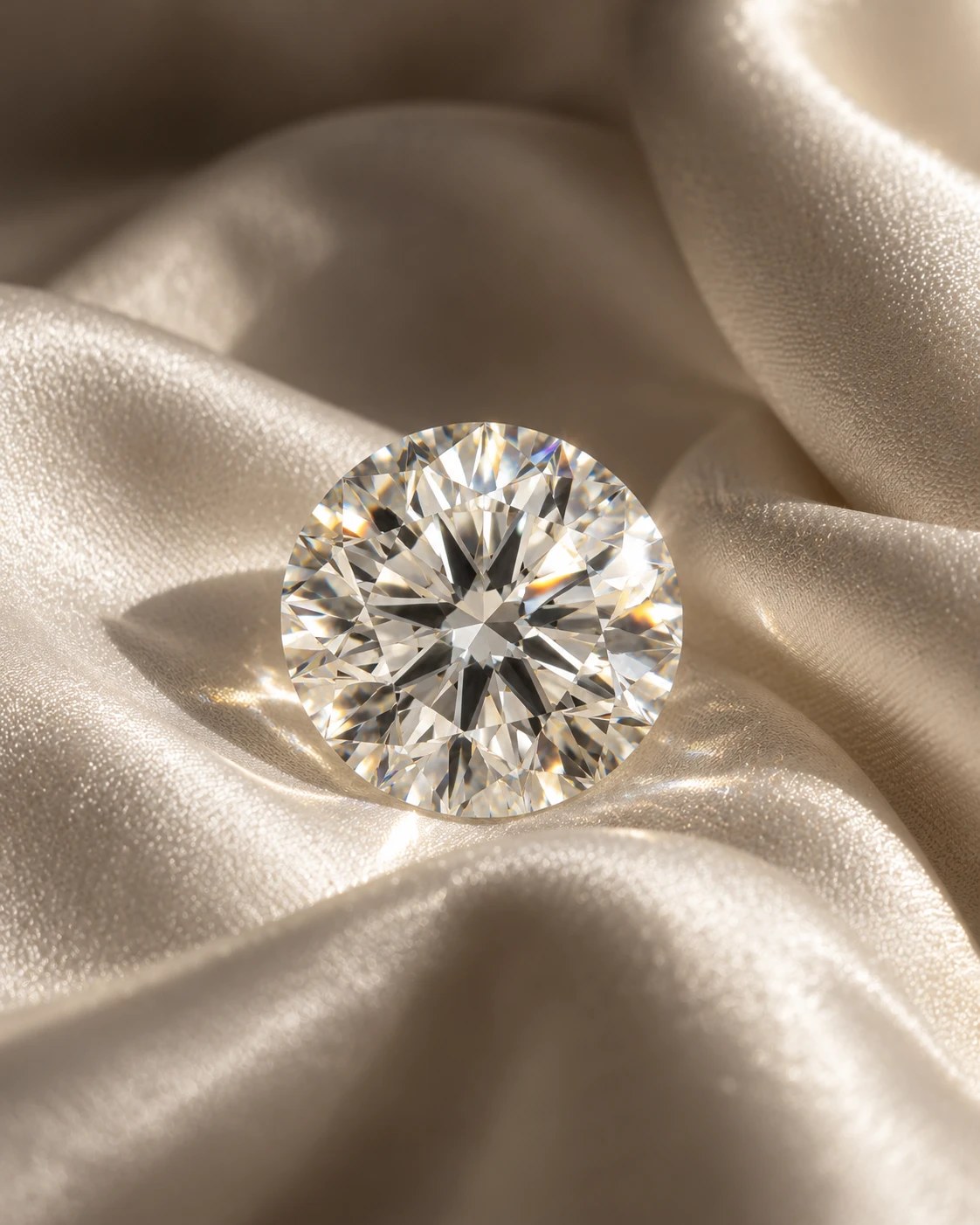
Carbon, in its hardest form.
A diamond’s value is described by the four Cs: carat weight, colour, clarity and cut. Of the four, cut matters most to how a diamond looks. A well-cut stone returns light evenly through the top, and a poorly cut one looks dull however good its grade.
Today a diamond may be natural or grown in a laboratory, and the two look identical to the eye. We state clearly which a stone is, and every diamond we show carries a full independent grading report.
| Species | Diamond |
|---|---|
| Composition | Carbon |
| Grading | Carat, colour, clarity, cut, with a full report |
| Principal origins | Botswana, Russia, Canada, South Africa, Angola, and historically the Golconda mines of India |
| Treatments | Laser drilling, fracture filling and high-pressure heating exist. We disclose any treatment, and state natural or laboratory-grown |
Four things we check before a diamond is shown.
Cut
We judge the proportions and the way the stone returns light, because a well-cut diamond looks brighter than a better-graded poorly cut one.
Colour
We look for a clear, colourless to near-colourless stone for white diamonds, and show it against a master reference.
Clarity
We look at the stone through a loupe and show you any natural inclusions, and avoid stones whose inclusions affect brilliance or durability.
Report
Every diamond carries an independent grading report, and we match the report to the stone in front of you.
Diamond and Venus.
In the classical tradition, diamond (heera) is the stone of Venus (Shukra) and is associated with beauty, harmony, refinement and comfort. It is traditionally set in platinum, white gold or silver and worn on the ring finger or the middle finger on a Friday.
Traditions differ about which stones are suited to which chart, and your astrologer’s advice should come first.
Care. Diamond is very hard but not unbreakable: a sharp blow can chip it. Clean it with warm, soapy water and a soft brush, and store it apart from other jewellery so that it does not scratch softer stones.
Asked about diamond.
Is your diamond natural or laboratory-grown?
We state clearly which it is on the stone and on the report. The two cannot be told apart by eye, which is why the report matters.
Which matters most, colour or cut?
For how a diamond looks, cut matters most. For how it is valued on paper, colour, clarity and weight carry most of the price.
Can I have an older stone re-cut?
Sometimes, but re-cutting reduces weight, so we advise on it case by case, and your chart may also have a say.
See the diamond in person.
Stones are shown on a video call first, then in person at a quiet place near you, with the laboratory report beside the stone.
Book a Meeting