Hessonite
Hessonite is a warm, honey-orange garnet, and the stone of Rahu, the north node, which classical astrology treats as a shadow planet.
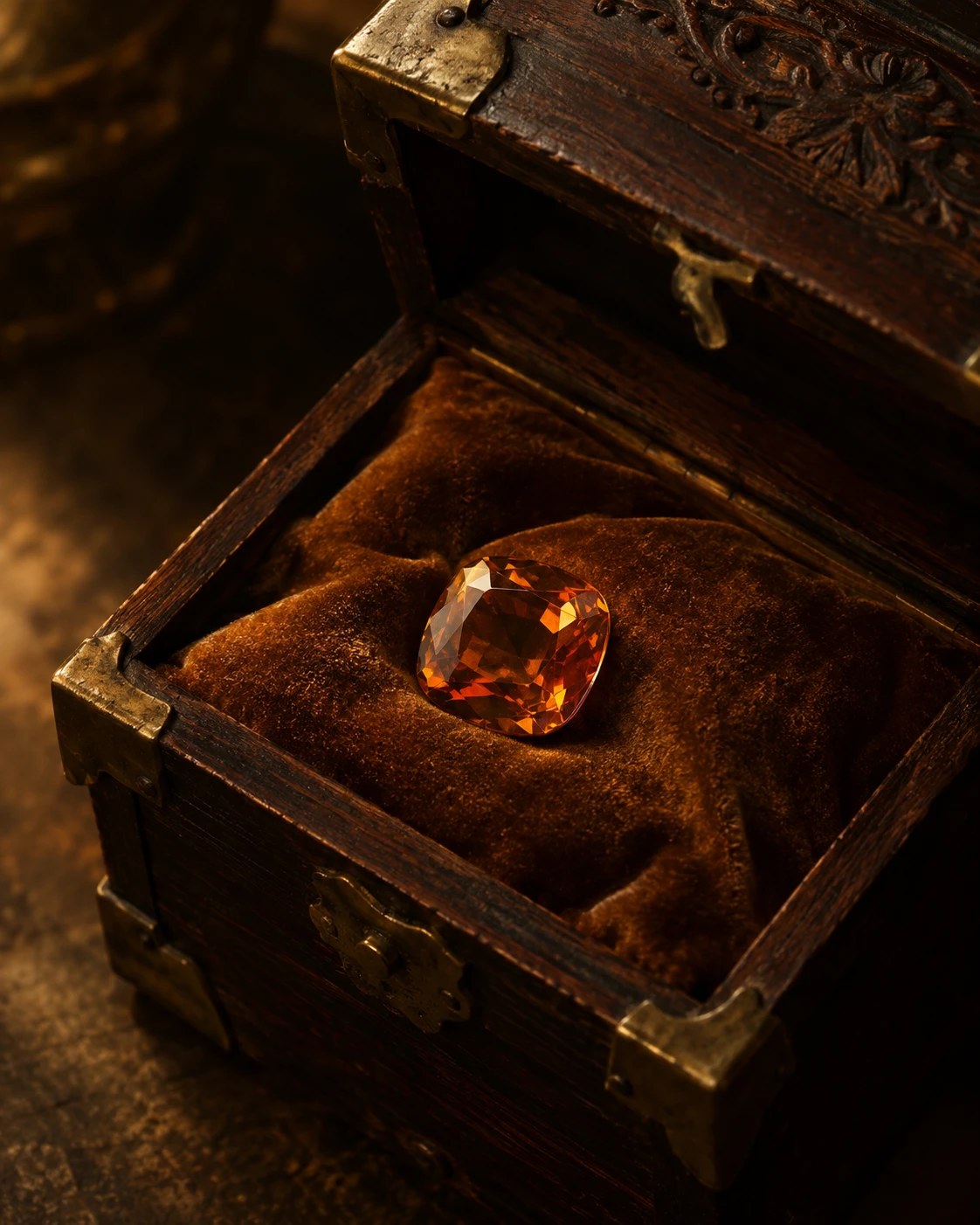
Garnet, in a honeyed orange.
Hessonite is the orange-to-cinnamon variety of grossular garnet, coloured by traces of iron. Its character is a warm, slightly oily-looking glow and a swirling internal texture that gemmologists describe as “treacle”, which is natural and typical of the stone.
Hessonite is usually left untreated. It is sometimes confused with citrine, glass or other garnets, which is why a laboratory report names the species.
| Species | Garnet, grossular variety |
|---|---|
| Composition | Calcium aluminium silicate with iron |
| Colour sought | Rich honey to cinnamon orange, bright and glowing |
| Principal origins | Sri Lanka, India, Brazil, Madagascar |
| Treatments | Generally untreated. We state anything done to the stone |
Four things we check before a hessonite is shown.
Colour
A warm honey to cinnamon with life in it, not a dull brown.
Transparency
We look for a clear stone with the natural swirl of treacle and not a cloudy or milky body.
Cut
A well-proportioned oval or cushion brings out the glow.
Species
We confirm on a laboratory report that the stone is hessonite garnet, not citrine or glass.
Hessonite and Rahu.
In the classical tradition, hessonite (gomed) is the stone of Rahu, the north node, and is associated with clarity through confusion and with protection from the unexpected. It is traditionally set in silver or an alloy of eight metals (ashtadhatu) and worn on the middle finger on a Saturday.
Rahu is a subtle subject, and your astrologer’s reading comes before any stone.
Care. Hessonite is softer than sapphire or diamond, so avoid knocks and abrasion. Clean it with warm, soapy water and a soft brush, and store it apart from harder stones.
Asked about hessonite.
Is the swirling inside a hessonite a flaw?
No. The internal swirl called treacle is natural and typical of hessonite, and glass imitations tend not to show it.
How do I tell hessonite from citrine?
They can look similar to the eye. A laboratory report tells them apart, and we give you the report.
Can hessonite be worn daily?
Yes, in a protective setting, with care to avoid hard knocks.
See the hessonite in person.
Stones are shown on a video call first, then in person at a quiet place near you, with the laboratory report beside the stone.
Book a Meeting